
Sri Samanvi Hospital & Fertility Centre
Gandhipuram, Rajamahendravaram, Andhra Pradesh – 533103
Meet Our Fertility Specialists
Dr. Sowjanya M.
M.S. (OBGY), Fellowship in Reproductive Medicine, FMAS
Dr. B.M. Rayudu
M.D. (Radiodiagnosis)
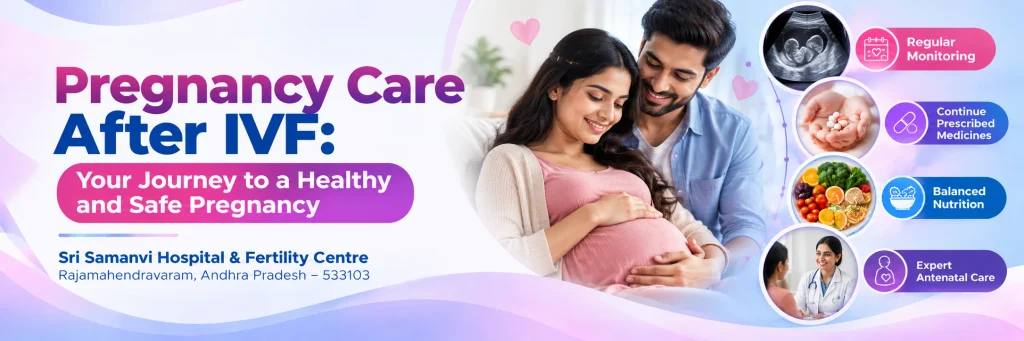
Pregnancy Care After IVF
A positive pregnancy test after IVF is a special milestone. After going through fertility treatment, many couples naturally have questions about medicines, scans, diet, activity, precautions and regular pregnancy care.
Once pregnancy is confirmed, IVF pregnancy care generally involves the same essential antenatal care as other pregnancies, while the fertility and obstetric team may provide additional early monitoring based on the individual’s medical history and treatment. IVF is also associated with some pregnancy-related considerations, including the possibility of multiple pregnancy and ectopic pregnancy. nhs.uk
At Sri Samanvi Hospital & Fertility Centre, Rajamahendravaram, pregnancy care after IVF focuses on monitoring the pregnancy and supporting the mother throughout her journey toward parenthood.
What Happens After a Positive IVF Pregnancy Test?
After embryo transfer, the fertility team usually advises when to perform a pregnancy test.
Once pregnancy is confirmed, your doctor may recommend:
- Follow-up consultations
- Blood tests when required
- Early pregnancy ultrasound
- Medication review
- Monitoring of pregnancy development
- Transition to regular antenatal care at the appropriate stage
The exact schedule depends on your treatment history and individual pregnancy.
1. Continue Your Prescribed Medicines
Some women may be prescribed medicines such as progesterone during early pregnancy as part of their IVF treatment plan.
Do not stop, change or add any medication on your own.
Your doctor will decide:
- Which medicines are required
- The dosage
- How long they should be continued
- When they should be reduced or stopped
Medication requirements can vary from one patient to another.
2. Early Pregnancy Ultrasound
An early ultrasound is an important part of pregnancy monitoring after IVF.
It may help the doctor assess:
- Location of the pregnancy
- Development of the pregnancy
- Number of gestational sacs
- Fetal development at the appropriate stage
- Presence of cardiac activity when it becomes visible
Early ultrasound is particularly important because IVF pregnancies have an increased risk of ectopic pregnancy compared with pregnancies conceived without fertility treatment. nhs.uk
3. Attend All Scheduled Pregnancy Appointments
Regular antenatal appointments help your doctor monitor both maternal and fetal health.
Depending on your pregnancy, appointments may include:
- Blood pressure monitoring
- Weight monitoring
- Blood tests
- Urine tests
- Ultrasound scans
- Fetal growth assessment
- Screening tests
- Vaccinations
- Other investigations when medically indicated
The frequency of visits may increase if there are additional risk factors or pregnancy complications.
4. Follow a Balanced Pregnancy Diet
A nutritious diet is important during pregnancy.
Try to include a variety of:
- Fresh fruits
- Vegetables
- Whole grains
- Pulses and legumes
- Protein-rich foods
- Milk and other suitable dairy products
- Nuts and seeds where appropriate
- Adequate fluids
Your doctor may recommend specific dietary changes depending on conditions such as diabetes, thyroid problems, anemia or other health concerns.
5. Take Prenatal Vitamins as Advised
Your doctor may recommend pregnancy supplements based on your nutritional needs.
Commonly prescribed supplements may include:
- Folic acid
- Iron
- Calcium
- Vitamin D
- Other supplements when required
The exact supplements and doses should be determined by your healthcare provider.
6. Stay Physically Active as Advised
Pregnancy does not automatically mean complete bed rest.
For many women with an uncomplicated pregnancy, appropriate physical activity may be beneficial.
However, after IVF, activity recommendations should be individualized according to:
- Pregnancy development
- Previous pregnancy history
- Bleeding or pain
- Multiple pregnancy
- Medical conditions
- Doctor’s advice
Avoid strenuous activity if your doctor has advised restrictions.
7. Avoid Smoking and Alcohol
Smoking and alcohol can negatively affect pregnancy.
During pregnancy:
- Avoid alcohol.
- Avoid smoking.
- Avoid exposure to tobacco smoke.
- Discuss any medication or substance use with your doctor.
Your healthcare provider can guide you regarding safe pregnancy practices.
8. Take Care of Your Mental Well-Being
After infertility treatment, a positive pregnancy test can bring happiness as well as anxiety.
Some couples may continue to worry about:
- Pregnancy development
- Miscarriage
- Ultrasound results
- Previous treatment experiences
- The baby’s health
These feelings can be understandable after fertility treatment.
Talking openly with your partner, fertility team or a qualified counsellor can help when anxiety becomes difficult to manage.
9. Understand Pregnancy Symptoms
Many normal pregnancy symptoms can occur after IVF, including:
- Mild nausea
- Tiredness
- Breast tenderness
- Increased urination
- Mild abdominal discomfort
- Changes in appetite
However, symptoms vary from person to person.
The presence or absence of pregnancy symptoms does not by itself determine whether a pregnancy is developing normally. Medical follow-up and appropriate investigations are more useful for assessing pregnancy progress.
10. Be Aware of Warning Signs
Certain symptoms during early pregnancy should not be ignored.
Contact your doctor promptly if you experience:
- Vaginal bleeding
- Increasing abdominal pain
- Severe cramping
- Significant abdominal swelling or pain
- Persistent vomiting
- Dizziness or fainting
- Unusual discharge
- Severe weakness
After IVF, one-sided lower abdominal pain, vaginal bleeding, dizziness/fainting or shoulder-tip pain can be warning signs of ectopic pregnancy and require urgent medical assessment. nhs.uk
If there is severe pain, heavy bleeding, fainting or difficulty breathing, seek emergency medical care immediately.
IVF Pregnancy and Ectopic Pregnancy
An ectopic pregnancy occurs when a pregnancy develops outside the main cavity of the uterus, most commonly in a fallopian tube.
Although ectopic pregnancy is uncommon, fertility treatment such as IVF is associated with an increased risk. nhs.uk
This is one reason early pregnancy monitoring is important after IVF.
Possible symptoms can include:
- Lower abdominal pain, especially on one side
- Vaginal bleeding
- Brown discharge
- Shoulder-tip pain
- Dizziness or fainting
Symptoms can vary, and some ectopic pregnancies may initially have no obvious symptoms. nhs.uk
Can You Have a Normal Pregnancy After IVF?
Yes. Many IVF pregnancies progress normally.
However, pregnancy after IVF should still receive appropriate antenatal care. Depending on the mother’s age, medical history, reason for IVF and whether there is a single or multiple pregnancy, the doctor may recommend additional monitoring.
IVF itself does not mean that every pregnancy will require special restrictions or bed rest.
What About Multiple Pregnancy After IVF?
If more than one embryo implants, a multiple pregnancy may occur.
Twin or higher-order pregnancies can require closer monitoring because they can carry additional pregnancy risks for the mother and babies.
Your fertility specialist will discuss the embryo-transfer plan and pregnancy monitoring appropriate for your circumstances.
Can You Continue Normal Daily Activities?
In an uncomplicated pregnancy, many women can continue their usual daily activities.
However, your doctor may recommend modifications depending on:
- Pregnancy development
- Bleeding or pain
- Multiple pregnancy
- Previous pregnancy complications
- Other medical conditions
Follow your doctor’s individual recommendations rather than comparing your pregnancy with someone else’s IVF journey.
Pregnancy Scans After IVF
Your doctor may recommend different scans during pregnancy depending on your stage of pregnancy and individual circumstances.
These may include:
Early Pregnancy Scan
Helps confirm the pregnancy location and assess early development.
First-Trimester Screening
May include ultrasound and blood tests as recommended.
Anomaly Scan
A detailed ultrasound is generally performed during the second trimester to assess fetal anatomy.
Growth Scans
Additional scans may be recommended when clinically indicated to monitor fetal growth and well-being.
IVF Pregnancy: Important Do’s and Don’ts
| Do’s | Don’ts |
|---|---|
| Attend regular appointments | Don’t skip scheduled check-ups |
| Take prescribed medicines | Don’t stop medicines without medical advice |
| Eat a balanced diet | Don’t follow extreme diets |
| Stay hydrated | Don’t ignore persistent vomiting |
| Follow recommended activity | Don’t perform strenuous activity against medical advice |
| Take prescribed supplements | Don’t take supplements without discussing them |
| Report unusual symptoms | Don’t ignore bleeding or severe pain |
| Take care of emotional health | Don’t hesitate to ask for support |
What If There Is Spotting After IVF?
Spotting or vaginal bleeding during early pregnancy can have different causes and does not always mean that a pregnancy has been lost.
However, any bleeding during pregnancy should be discussed with your healthcare provider, particularly after IVF.
If bleeding is accompanied by severe pain, dizziness, fainting or heavy bleeding, urgent medical assessment is important. nhs.uk
When Does IVF Pregnancy Care Become Regular Antenatal Care?
Early pregnancy is generally monitored by the fertility team and/or obstetrician.
Once the pregnancy has progressed appropriately, your care may transition into routine antenatal care, depending on your individual situation.
Your fertility specialist can coordinate with your obstetric team to ensure continuity of care.
Emotional Care After IVF
Pregnancy after IVF can be emotionally different from a naturally conceived pregnancy.
After months or years of fertility treatment, some couples may feel anxious even after receiving a positive pregnancy test.
It is important to:
- Share concerns with your doctor
- Communicate with your partner
- Avoid unnecessary comparisons
- Take adequate rest
- Seek professional counselling when needed
Emotional support is an important part of fertility and pregnancy care. nhs.uk
Pregnancy Care After IVF at Sri Samanvi Hospital & Fertility Centre
At Sri Samanvi Hospital & Fertility Centre, Rajamahendravaram, we understand that the journey does not end with a positive pregnancy test.
Our team can support patients through appropriate early pregnancy monitoring and help coordinate ongoing pregnancy care based on individual medical needs.
Our Fertility Specialists
Dr. Sowjanya M.
M.S. (OBGY), Fellowship in Reproductive Medicine, FMAS
Dr. B.M. Rayudu
M.D. (Radiodiagnosis)
Every pregnancy is different, so your care plan is customized according to your medical history, treatment and pregnancy development.
Frequently Asked Questions
1. Is pregnancy after IVF different from natural pregnancy?
The basic principles of pregnancy care are similar, but early monitoring may be particularly important after IVF because of factors associated with fertility treatment and the individual’s medical history.
2. Should I continue progesterone after a positive IVF pregnancy test?
If progesterone has been prescribed, continue it exactly as directed by your fertility specialist. Do not stop it without medical advice.
3. When is the first scan after IVF?
The timing is decided by your fertility specialist based on the pregnancy test, embryo-transfer history and individual circumstances.
4. Can I work after becoming pregnant through IVF?
Many women with uncomplicated pregnancies can continue working. Your doctor can advise you based on your occupation, pregnancy and health.
5. Can I exercise during IVF pregnancy?
Appropriate activity may be possible in an uncomplicated pregnancy, but exercise recommendations should be individualized by your doctor.
6. Is bleeding normal after IVF pregnancy?
Bleeding can occur for different reasons and does not always mean miscarriage. However, it should be reported to your healthcare provider for appropriate assessment.
7. What symptoms require urgent medical attention?
Severe abdominal pain, heavy bleeding, fainting, severe dizziness, difficulty breathing or significant one-sided abdominal pain require urgent medical evaluation.
8. Does IVF increase the risk of ectopic pregnancy?
IVF is associated with an increased risk of ectopic pregnancy, which is why early pregnancy assessment is important. nhs.uk
9. Will I need more scans after IVF?
Not necessarily. The number of scans depends on your pregnancy, medical history and whether there are additional risk factors.
10. When should I contact my doctor during early pregnancy?
Contact your doctor whenever you have concerns, particularly if you experience bleeding, significant abdominal pain, severe vomiting, dizziness or other unusual symptoms.
Your IVF Journey Continues Beyond the Positive Test
A positive IVF pregnancy test is an important milestone, but regular pregnancy care remains essential.
With appropriate medical follow-up, healthy lifestyle habits, prescribed medications and timely monitoring, you can move forward through your pregnancy with informed and individualized care.
Sri Samanvi Hospital & Fertility Centre
Gandhipuram, Rajamahendravaram, Andhra Pradesh – 533103
Call for Consultation:
0883 2474 242 | 9347531268